

By Gail Boushey Published: 2/16/2026 Updated: 4/15/2026
Every program comes with an assumption.
It's never listed in the implementation guide or the training materials or the fidelity checklist. But it's there, built into every scripted lesson, every pacing guide, every scope and sequence.
The assumption is this: that the teacher already has the foundations of teaching in place.
This is what I mean:
That they can read a room mid-lesson and know (I mean, really know) whether students are getting it or passively going through the motions. That when three students don't understand, they know how to gather them, reteach in five minutes, and send them back with what they needed. That they can build the kind of student independence that frees them to move through the classroom, to confer, to respond—rather than manage. That they know how to structure a small group lesson so it sticks. That they know when to follow the program exactly and when to set it down and teach.
Programs assume all of that is already there.
And when it is, programs are extraordinary. A skilled teacher with a strong curriculum is a powerful combination. The content is clear and sequenced. The teacher brings the craft. Students don't just encounter the lesson, they learn it.
But when the foundations aren't there (i.e. when a teacher was trained on the program but not on teaching itself) something different happens. The lessons get delivered. The pacing guide gets followed. The boxes get checked. And at the end of the year, the data shows what the teacher felt: some students got there. Some didn't. And nobody can explain exactly why—because the program was followed faithfully.
This assumption can make it feel like the program is failing, or failed.
To understand this, we first must discuss:
I first want to clarify that this isn't an argument against programs. Programs matter. Systematic, well-sequenced curriculum is valuable. The research behind structured literacy, explicit instruction, and coherent scope and sequence is real. If your district has invested in a strong program, that investment is worth protecting.
But here is what every program—no matter how carefully designed—cannot do:
Only a teacher can do those things. And only a teacher who knows the foundations of teaching—who has built real craft in reading a room, responding to students, structuring the small moments that make learning stick—can do them consistently, for every student, across an entire year.
That is not a criticism of programs. It is simply the truth of what teaching is.
There is a body of knowledge that every teacher needs. Not knowledge of any particular program or curriculum, but knowledge of teaching itself.
These are the foundations of teaching. They are not content-specific. They are not program-specific. They work in any classroom, with any curriculum, at any grade level. A teacher who has built fluency here walks into any program, any mandate, any adoption cycle, and knows what to do.
Not just what the program says to do next.
What this student needs right now.
When teachers come to a program with deep knowledge of teaching, the program stops being a script and becomes a resource. The pacing guide stops being a mandate and becomes a map. The lesson stops being something to deliver and becomes something to teach.
The teacher who knows the foundations can follow the program and still see the student who needs something different. Can deliver the scripted lesson and still know when to pause, when to go deeper, when to pull three students aside and close the gap before it widens. Can use the program's materials fully to get more from them than a teacher who is simply following along ever could.
This is what it looks like when the investment in curriculum actually pays off.
Because the teacher got deeper.
If you are a teacher stepping into a mandated curriculum, start here.
You'll learn a structure built on the foundations of teaching that will make everything else work. Your program's training and the pacing guide can wait.
If you are a principal who purchased a program and is watching your teachers struggle to make it work this is also for you. On that page, you'll also find your PD plan for the year.
If you are a district leader asking why the results aren't matching the investment start here too.
You probably don't need a new program. You need to build the teacher capacity that every program requires but none of them build.
Programs will keep changing. Mandates will keep shifting. The state-approved list will look different in three years than it does today.
The foundations of teaching don't change.
A teacher who knows them deeply walks into any classroom, with any program, in any year, and knows how to reach every student.
That knowledge is what The Teaching Practice builds.
And it starts before you ever open the program.
Quick lessons you can teach in 10 mins/day so students take responsibility for their learning and rely on you less.
Get the LessonsTeaching is complex. And the challenges teachers are navigating right now are real.
Strong programs, new mandates, and growing expectations have changed what classrooms look like. Yet the foundations of effective teaching remain the same.
Students need to practice independently.
Teachers need time to respond to learners.
Learning needs structure to carry forward.
These are skills that can be built.
At Teach Daily, we focus on the structure of teaching. How lessons, independent practice, and responsive conferring work together across a day so learning lasts.
Choose your next move:
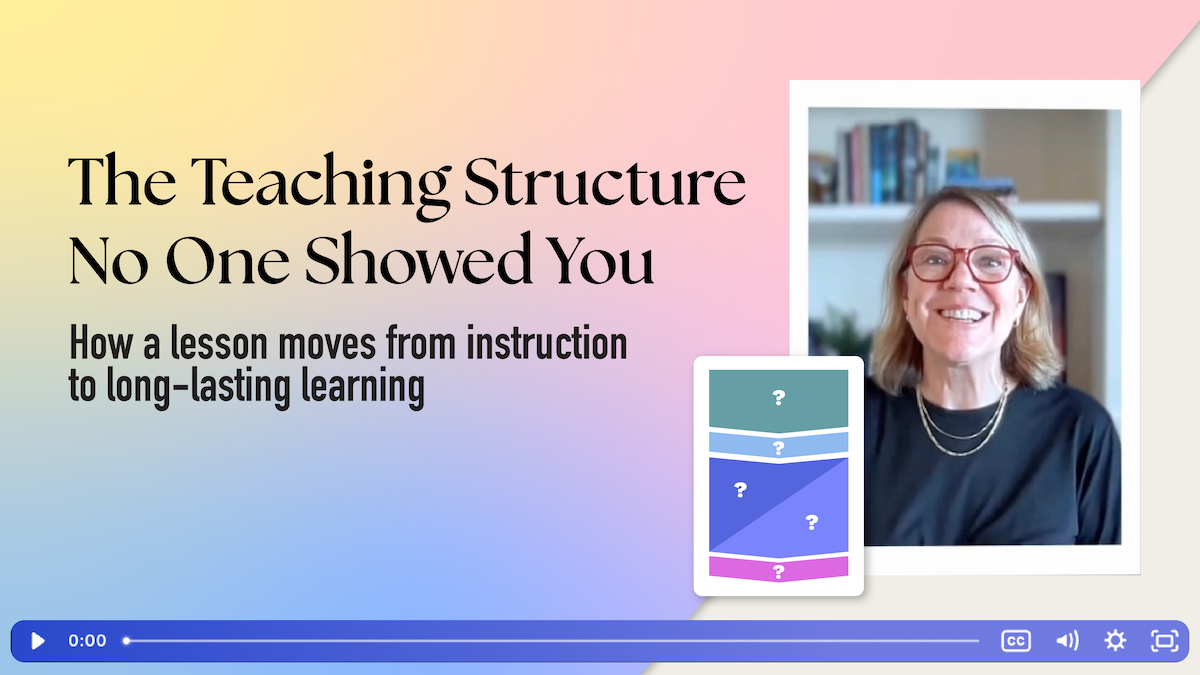
If you want to see the structure clearly, watch this training:
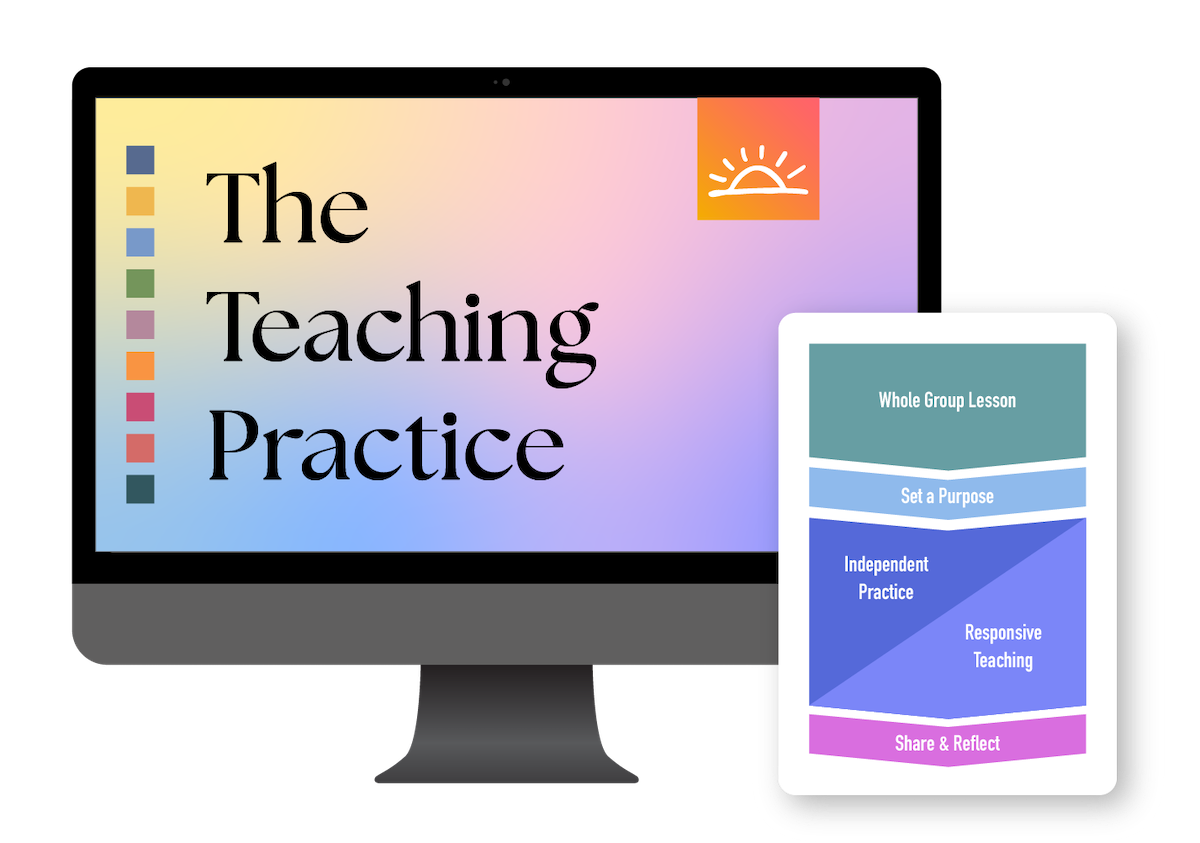
If you’re ready to strengthen these skills:
© 2026 Teach Daily
This site is protected by reCAPTCHA and the Google Privacy Policy and Terms of Service apply.