

By Gail Boushey Published: 6/28/2026
Evaluation frameworks describe what effective teaching looks like. They name the practices, describe the indicators, and give observers a language for what they see in classrooms. What they do not do is give teachers a way to build those practices.
That is the gap The Teaching Practice fills.
The Teaching Practice is a video-based professional learning system built around eight high-impact teaching practices, each one grounded in John Hattie's Visible Learning research, the largest synthesis of educational research ever conducted. Hattie's analysis of over 800 meta-analyses, representing the learning of over 300 million students, identified the practices that most influence student achievement. Every one of them is teachable. Every one of them is inside The Teaching Practice.
For school and district leaders investing in Science of Reading implementation, these eight practices answer a question the curriculum alone cannot: what does a classroom need to have in place for structured literacy instruction to reach every student?
Hattie established 0.40 as the hinge point, the threshold above which a practice has meaningful, measurable impact on student achievement. Every practice below exceeds that threshold significantly.
Hattie Effect Size: d = 0.72
Positive teacher-student relationships are among the most powerful influences on student achievement in Hattie's research. When students feel known and valued, they engage more deeply, persist through difficulty, and take the academic risks that learning requires. For Science of Reading instruction, trust is the condition that allows a student to try, miscue, and try again.
Hattie Effect Size: d = 0.53 (classroom cohesion)
A purposeful learning environment is an instructional tool. Sound walls, word walls, anchor charts, and organized materials reduce cognitive load and put learning supports in students' hands. When a classroom functions as a unified, organized learning community, student achievement rises measurably.
Hattie Effect Size: d = 0.62 (classroom behavioral practices)
Predictable routines free cognitive capacity for learning. When students move through transitions, access materials, and engage in independent practice with confidence and consistency, the teacher is released to lead focused instruction and respond to individual students. Routines are the infrastructure that makes rigorous literacy instruction possible.
Hattie Effect Size: d = 0.79 (deliberate practice); d = 0.71 (spaced practice)
Deliberate, purposeful independent practice is a cornerstone of both Hattie's research and Science of Reading instruction. Students need structured time to apply what has been explicitly taught: decoding practice, fluency reading, vocabulary work, and collaborative discussion. The design of that practice time determines whether explicit instruction transfers to independent use.
Hattie Effect Size: d = 0.75 (teacher clarity); d = 0.59 (direct instruction)
Teacher clarity is one of the highest-leverage instructional practices in Hattie's research. A brief, well-designed lesson teaches one thing clearly, models it explicitly, and creates time for guided practice, conferring, and application. Structured literacy depends on this kind of focused, direct teaching, and it is a skill that develops through deliberate professional learning.
Hattie Effect Size: d = 0.70 (feedback)
Feedback is among the most powerful influences on student achievement in Hattie's research. One-on-one and small-group conferring is where feedback becomes personal and precise. A teacher listens to a student read, identifies a specific need, and responds in the moment. This is responsive literacy instruction at its most effective.
Hattie Effect Size: d = 0.90 (formative evaluation); d = 1.44 (student self-assessment)
Formative evaluation and student self-assessment sit among the highest effect sizes in all of Hattie's research. When teachers use ongoing assessment to adjust instruction and when students understand their own learning progress, achievement accelerates significantly. For Science of Reading classrooms, fluency checks, phonics screeners, and comprehension conversations are integral to instruction, not additions to it.
Hattie Effect Size: d = 0.69 (metacognitive strategies)
Transfer is the measure of learning. When students apply what they have learned across subjects, settings, and tasks, using a decoding strategy in a new text, drawing on vocabulary in their writing, explaining a concept to a peer, the instruction has taken hold. Hattie's research on metacognitive strategies confirms that when students direct and monitor their own application of learning, achievement rises measurably.
These eight practices represent decades of research on how students learn and how classrooms function, research that runs alongside the Science of Reading conversation, not against it.
Daily 5 and CAFE, developed in the early 2000s and refined through two editions each, were built on this same research base. Hundreds of studies on motivation, independence, classroom environment, deliberate practice, and responsive instruction informed both frameworks. When John Hattie published Visible Learning in 2009, the meta-analytic evidence named precisely what Daily 5 and CAFE had been doing in classrooms for years.
Prepared Classroom (Boushey & Behne, 2024, Routledge) took that recognition further, naming the eight practices explicitly, aligning each to Hattie's research, and expanding their application beyond literacy to teaching across all subjects and grade levels.
The Teaching Practice is the professional learning system built on that foundation. Eight video courses, one for each high-impact practice, give teachers a research-grounded path for developing these skills on their own time, on demand, in their own classroom context.
Science of Reading curricula describe what to teach. The eight high-impact practices determine whether that teaching reaches every student.
When leaders invest in both, a research-aligned curriculum and the teaching practices that make it work, they create the conditions for literacy instruction to succeed at scale.
The Teaching Practice is available to teachers, coaches, mentors, and principals through TeachDaily. Individual teacher licenses and school-wide implementation options are available at teachdaily.com/membership.
References
Boushey, G., & Moser, J. (2006). The Daily 5: Fostering Literacy Independence in the Elementary Grades (1st ed.). Stenhouse.
Boushey, G., & Moser, J. (2009). The CAFE Book: Engaging All Students in Daily Literacy Assessment and Instruction (1st ed.). Stenhouse.
Boushey, G., & Moser, J. (2014). The Daily 5: Fostering Literacy Independence in the Elementary Grades (2nd ed.). Stenhouse.
Boushey, G., & Behne, A. (2019). The CAFE Book: Engaging All Students in Daily Literacy Assessment and Instruction (Expanded 2nd ed.). Stenhouse.
Boushey, G., & Behne, A. (2024). Prepared Classroom: Ready to Teach, Ready to Learn (1st ed.). Routledge. https://doi.org/10.4324/9781032682846
Hattie, J. (2009). Visible Learning: A synthesis of over 800 meta-analyses relating to achievement. Routledge.
Hattie, J. (2023). Visible Learning: The Sequel. A synthesis of over 2,100 meta-analyses relating to achievement. Routledge.
Quick lessons you can teach in 10 mins/day so students take responsibility for their learning and rely on you less.
Get the LessonsTeaching is complex. And the challenges teachers are navigating right now are real.
Strong programs, new mandates, and growing expectations have changed what classrooms look like. Yet the foundations of effective teaching remain the same.
Students need to practice independently.
Teachers need time to respond to learners.
Learning needs structure to carry forward.
These are skills that can be built.
At Teach Daily, we focus on the structure of teaching. How lessons, independent practice, and responsive conferring work together across a day so learning lasts.
Choose your next move:
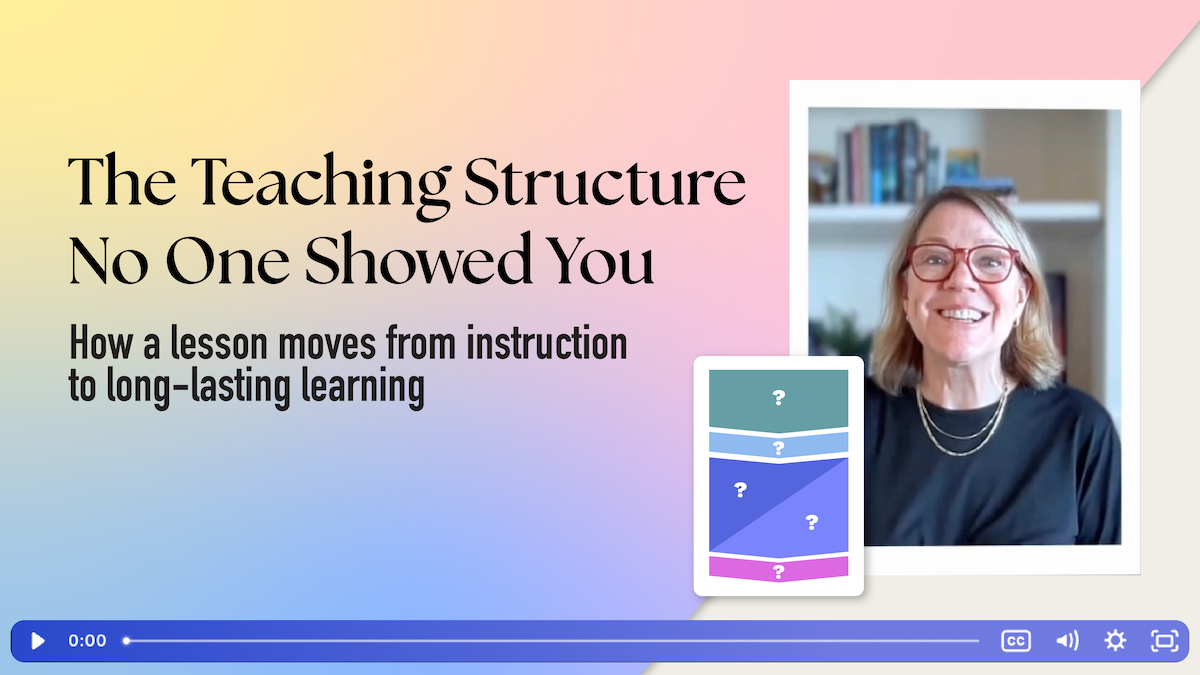
If you want to see the structure clearly, watch this training:
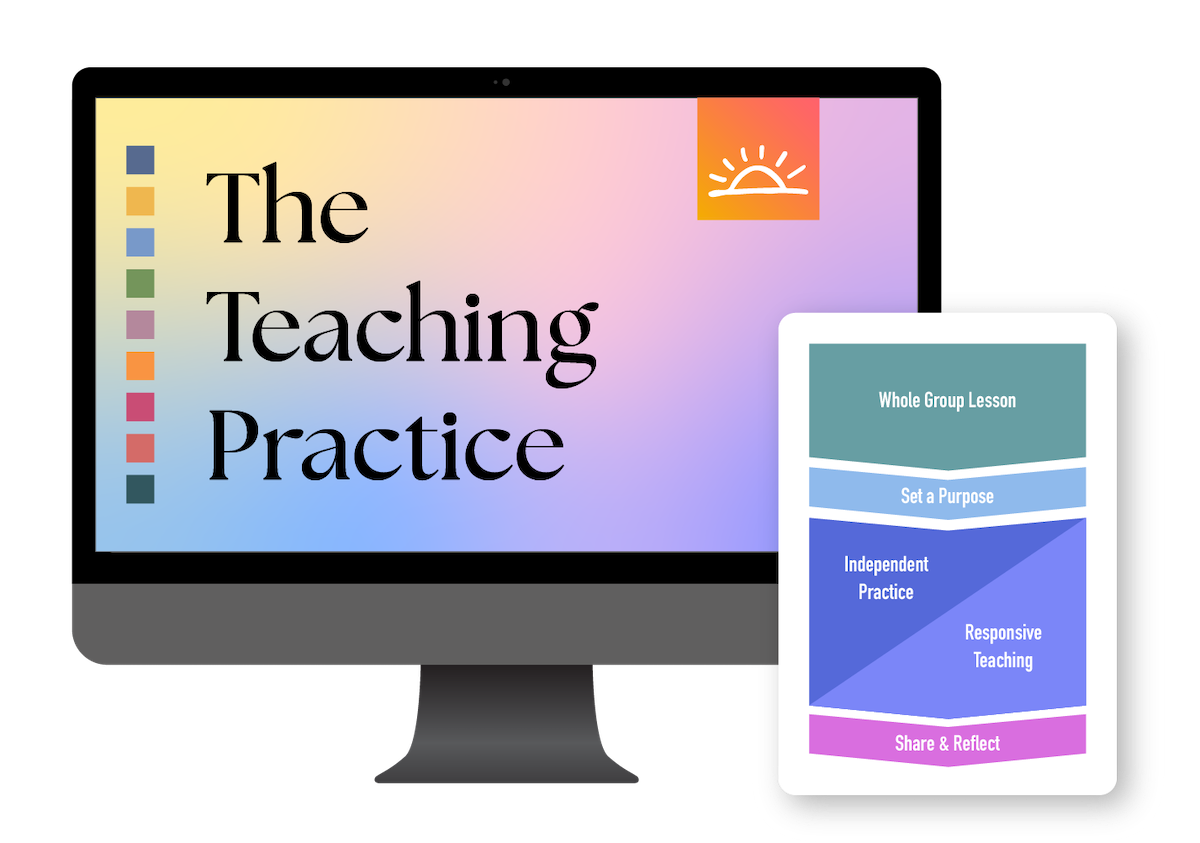
If you’re ready to strengthen these skills:

© 2026 Teach Daily
This site is protected by reCAPTCHA and the Google Privacy Policy and Terms of Service apply.