
By Gail Boushey Published: 2/16/2026 Updated: 7/21/2026
Can you visualize the structure of an effective literacy block in your mind right now?
Not the content you're teaching (phonics, comprehension, vocabulary). Not the program you're using (Amplify, Fundations, UFLI).
The structure. The flow. The organization of time and instructional moves that makes student learning possible.
Most teachers can't. We were prepared to deliver lessons, not to carry a clear mental map of the whole block that learning research keeps pointing back to.
Most teachers were never shown a visual map of how instructional time should be organized. We were given programs with lesson plans. We were told to "do guided reading," "run centers," or "follow the pacing guide."
But nobody named the underlying structure—the framework that holds it all together and makes responsive teaching possible.
So we teach by intuition, by trial and error, by piecing together bits from different programs and hoping it works.
Some teachers eventually build a mental structure, but it can take years. And during that time, the students who most need consistent routines and targeted support are the ones most at risk of missing out.
Want to see it broken down in a video instead? Watch this workshop:
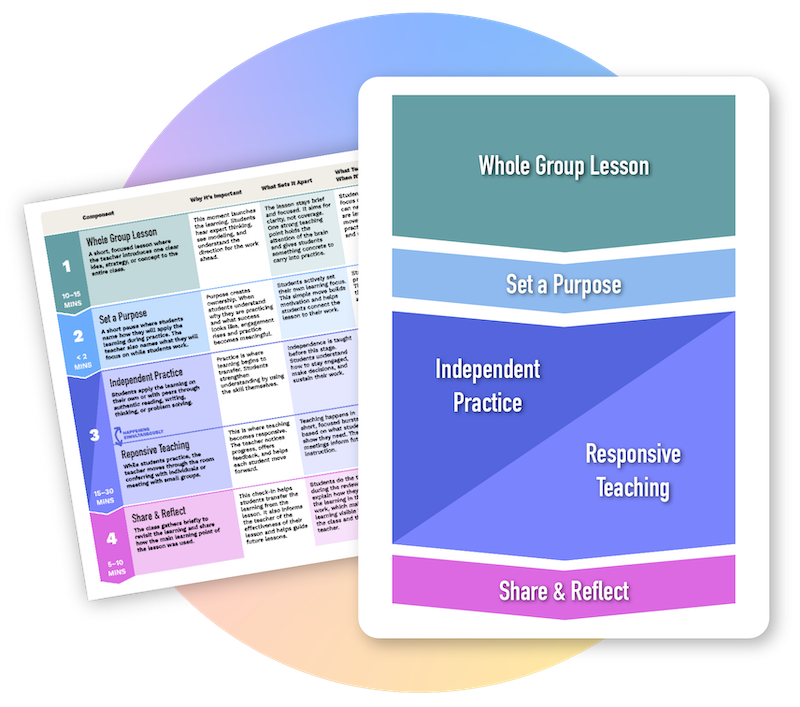
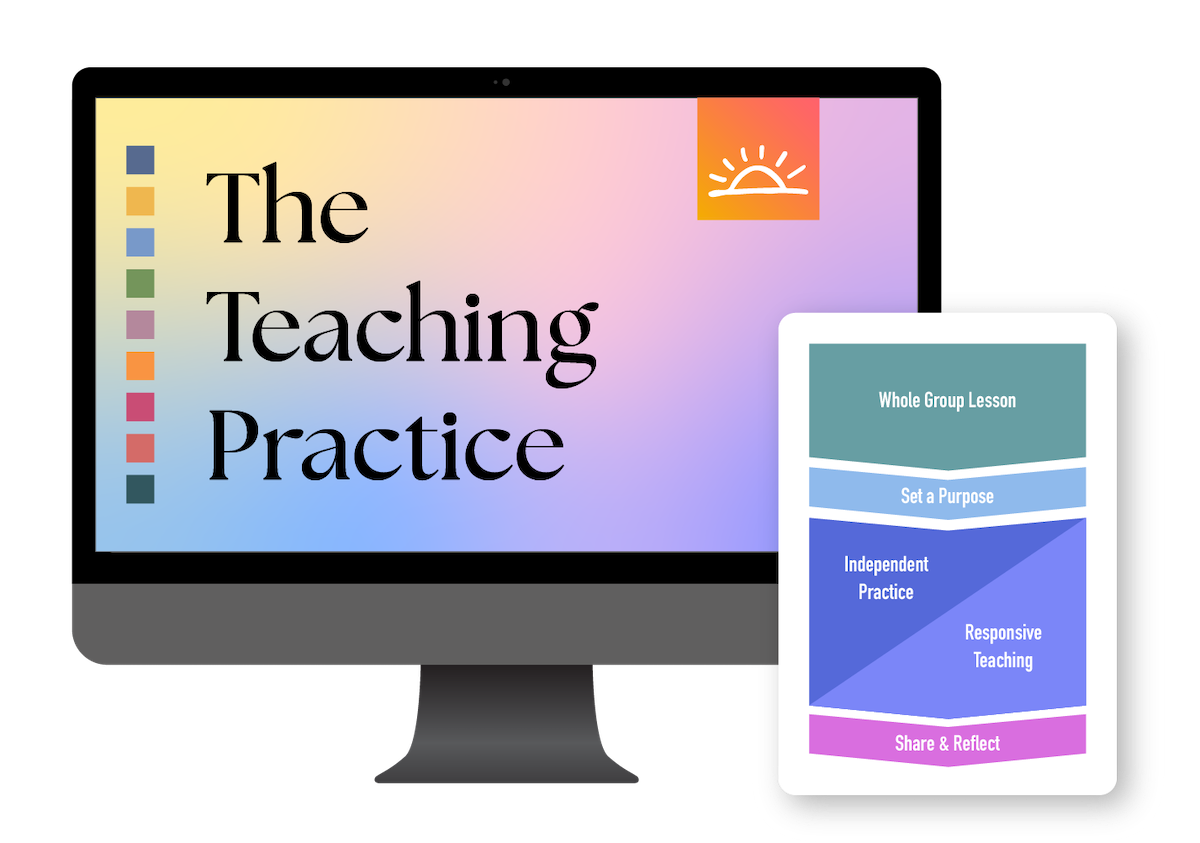
A visual map showing exactly how instructional time is organized—not just what happens in sequence, but also what happens simultaneously.
This isn't about a specific program or curriculum. It's the universal structure underneath effective teaching: brief focused input, scaffolded practice, extended independent work with feedback, and time to consolidate learning. Different researchers give it different names, but the pattern is the same.
When you can see this structure, you can:
The structure has five components. And within two of them—the diagonal line—reveals something most teachers have never been able to see.
Here's the Teaching Structure that expert teachers have in their minds and that many programs assume you already know.
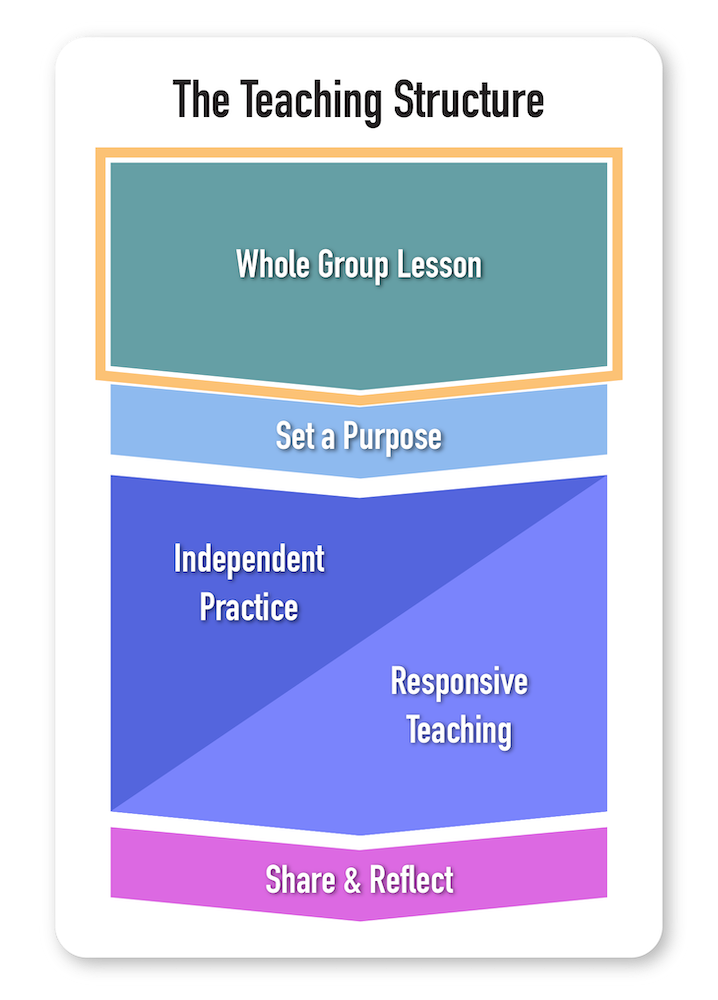 This is explicit instruction on one clear learning target. It's where your program's lesson plan fits—the systematic phonics lesson, the comprehension strategy, the math concept.
Within this brief window, you move through a full gradual release of responsibility:
By the end of this short lesson, students have moved from watching you to trying the work with your support. Research on effective instruction points to this pattern: teach one thing clearly, in small steps, with modeling and guided practice rather than long, dense explanations that overload working memory.
Crucially, this gradual release is embedded inside the 8–15 minute lesson. You're not bolting on separate 10‑minute "guided practice" blocks. You're moving fluidly through these moves within one focused lesson.
Why it's brief: Cognitive load research shows students can only hold 3–7 new pieces of information in working memory at once. Longer lessons don't increase learning—they increase cognitive overload.
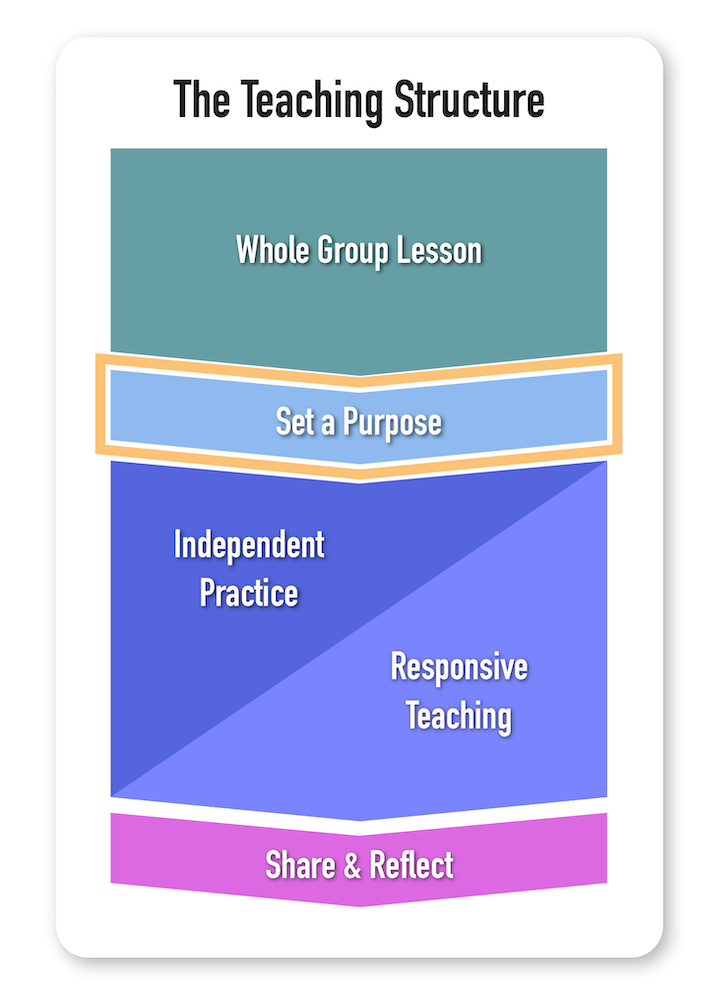 Before students practice independently, they need to know exactly what they are practicing and why it matters.
In this quick step you:
For example: "Today while you practice, you're applying what we just learned about breaking -ing words into the base word and the ending. Your job is to notice and try that every time you see an -ing word."
This tiny move sharpens students' attention, supports multilingual learners and students with IEPs by making expectations concrete, and activates metacognition so students monitor themselves instead of waiting for you to tell them if they're “right.”
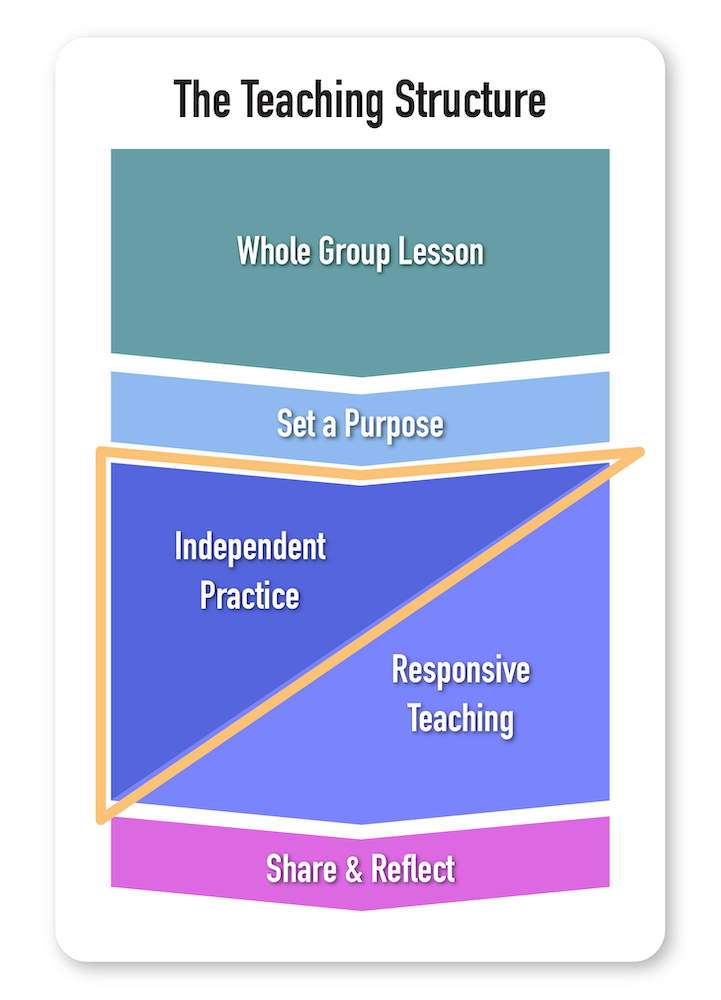
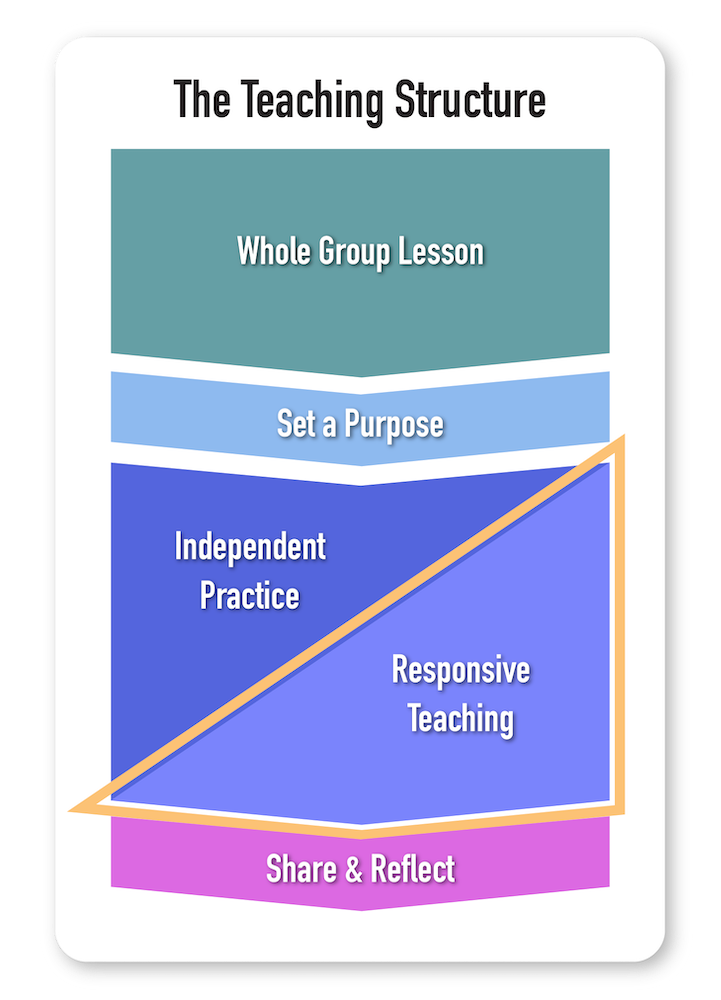
This is where the diagonal line appears on the visual map—and where most teachers say, "No one ever showed me this before."
While students practice independently, you are providing responsive teaching through conferring and small‑group instruction. These two things happen simultaneously, not sequentially.
On the visual, the diagonal line represents how much support you are giving and how much independent time students are getting:
That diagonal line reveals the real flexibility inside every instructional block:
This is where equity lives in the structure: support is distributed based on need, not on who raises a hand first or who happens to be in a fixed group.
During this time, you might:
Meanwhile, the rest of the class is practicing the day's purpose with clear routines and expectations. That combination—students working with purpose, you moving along the diagonal—is what turns instruction into durable learning.
This is the structure that ensures every student gets what they need to actually learn—not just hear the lesson, but transfer it to long-term memory through supported practice and responsive teaching.
And once routines are built, this component actually reduces your mental load. You're not constantly asking "What now?"; you're working inside a familiar pattern and focusing on "Who now?" and “What do they need?”
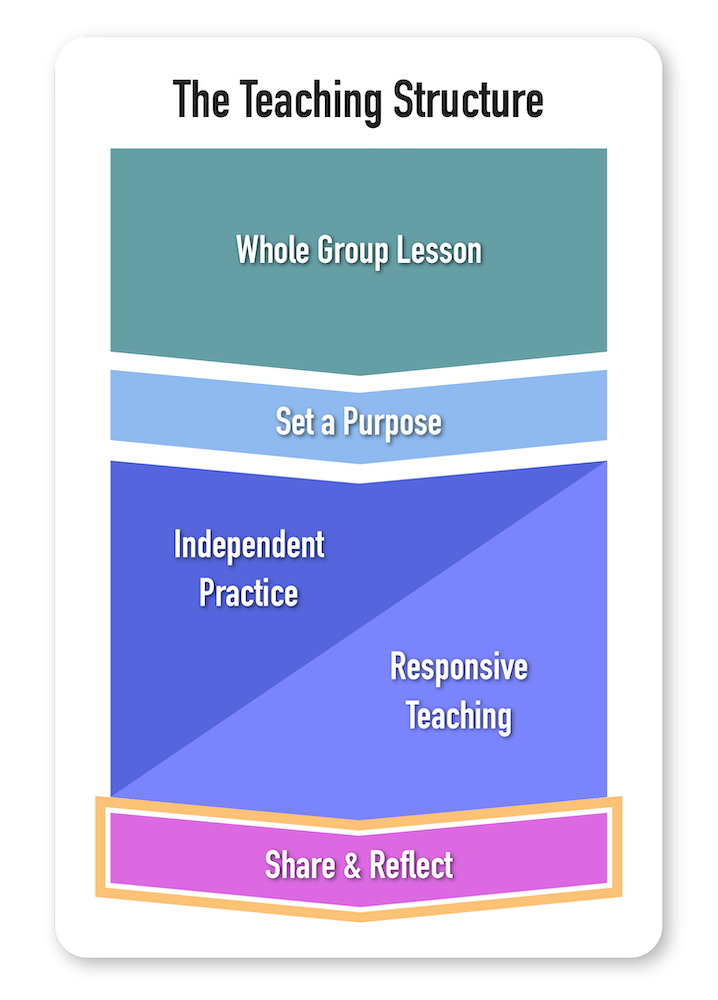 A short closing brings the block together:
This is where learning is named, reinforced, and prepared for tomorrow. It can be simple—turn‑and‑talk, a quick written example, a couple of share‑outs—but it keeps new learning from fading and lets all students, not just the most vocal, see themselves as thinkers and readers.
Why it matters: Neuroscience research on memory consolidation shows that learning not reviewed within 24 hours is largely lost. This component moves learning into long-term memory.
Some teachers wonder: How does this work with my Science of Reading program?
If your school uses a Science of Reading program—Amplify, Fundations, UFLI, Wit & Wisdom, or others—this structure works WITH your program, not instead of it.
Your program tells you WHAT to teach during explicit instruction: systematic phonics, decoding strategies, comprehension skills.
The Teaching Structure shows you HOW to organize the time before and after that instruction so:
Your program's lesson plan is one component of this structure. The structure shows you what happens during the other 45–60 minutes of your literacy block—without adding extra "programs" or competing philosophies.
Important clarification: The Teaching Structure organizes your entire literacy block (60–90 minutes), not just a single 15‑minute lesson.
Your Science of Reading program provides lesson plans for Component 1—the brief, focused instruction:
The Teaching Structure shows you what happens during the rest of the block:
Think of it this way:
Your Science of Reading program provides:
The Teaching Structure provides:
Your program tells you WHAT to teach in that 15‑minute lesson. The structure shows you HOW to organize the time before and after so students get the practice and support they need to actually learn it.
A quick example: Your Fundations lesson has you teach the suffix ‑ing on Tuesday. That 15‑minute lesson is Component 1, with gradual release built in. You then:
The program provides the content. The structure organizes the time.
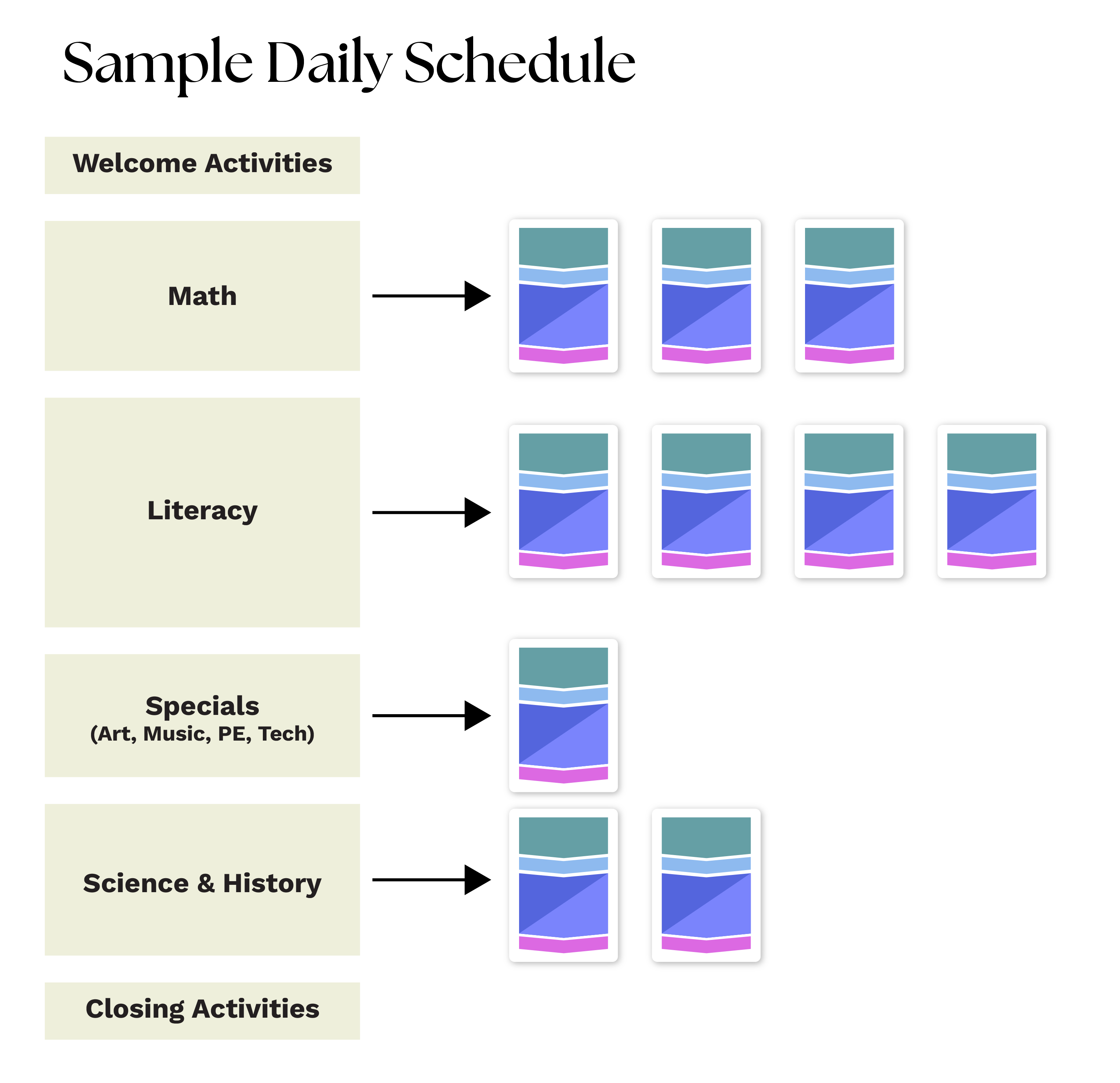
Here's another powerful feature of this structure: it scales and repeats.
In a 45‑minute block, you might use the structure once. In a 90‑minute literacy block, you might cycle through it two or three times with different teaching points.
The pattern stays the same; you simply repeat it.
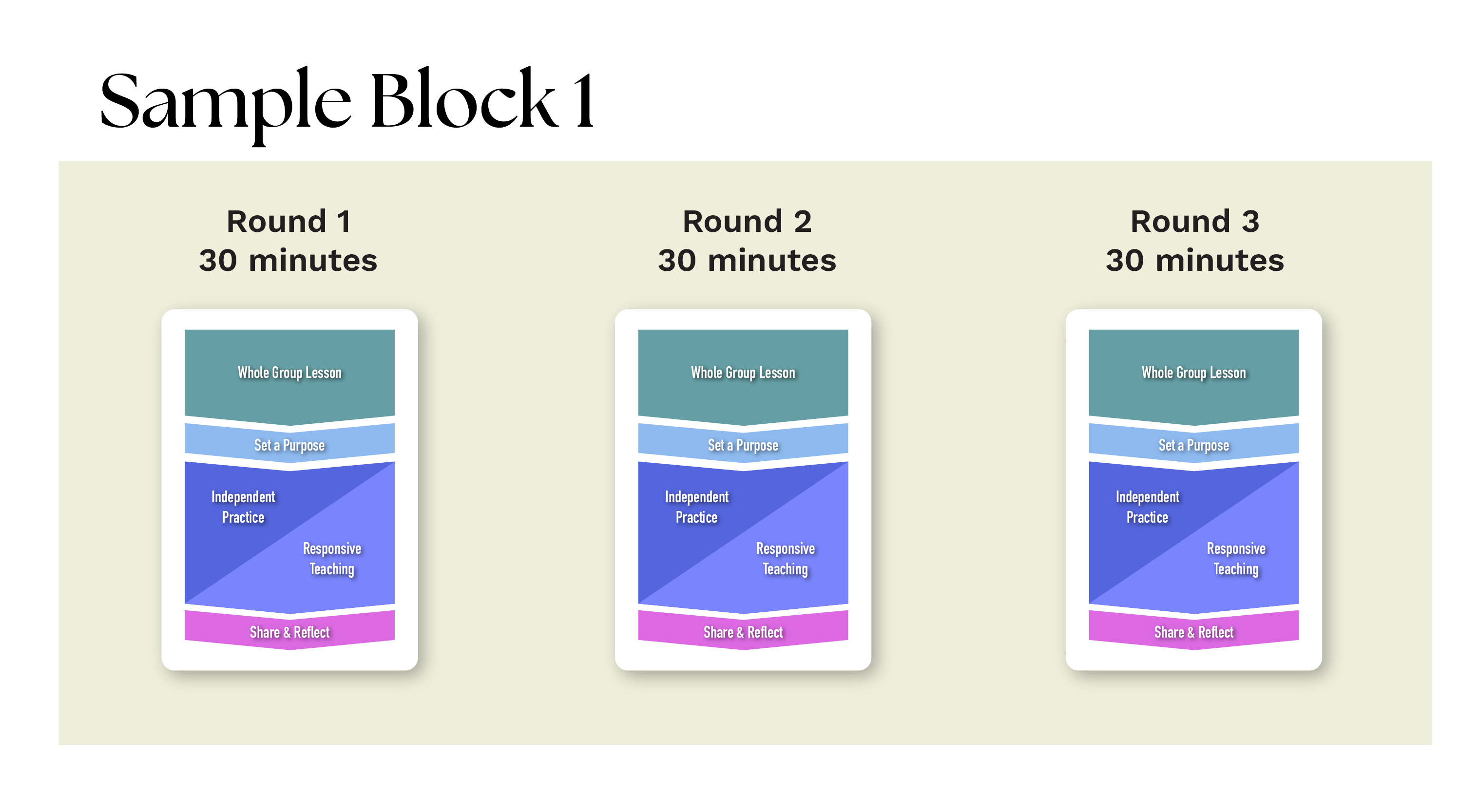
Cycle 1 – Phonics (≈30 minutes)
Cycle 2 – Reading Comprehension (≈30 minutes)
Cycle 3 – Writing (≈30 minutes)
Same structure. Different content. Multiple cycles.
Once you know the pattern, you can flex it across block lengths and subjects without losing coherence.
This is what makes the structure so powerful: learn it once, use it everywhere, repeat it as needed.
By the end you'll know why your lessons aren't transferring and what to strengthen first.
You'll see these components—brief instruction, gradual release, independent practice, responsive teaching, consolidation—in effective teaching everywhere. That's because they're based on cognitive science research about how students actually learn, not on any specific teaching philosophy or curriculum.
The Teaching Structure gives you three things together:
Seeing all three in one place makes expert practice visible, explicit, and teachable.
If you already teach this way, this framework gives you the language to coach others and the diagnostic tool to see where beginning teachers struggle.
If you're still developing these practices, this framework shows you exactly what to work on, where, and how.
The map doesn't just show you what expert teaching looks like. It shows you where YOUR teaching breaks down.
The teaching structure shows you exactly where your gaps are. And once you know where your gaps are, you know exactly what practices to strengthen.
This is how teacher learning drives student learning. When you strengthen the practices that support each component of the structure, your students get better instruction, more practice time, and more responsive support. Teacher growth is directly tied to student outcomes. When teachers learn, students learn.
The Teaching Structure isn't just for literacy. It's the universal organization of effective teaching in any subject:
The structure stays the same. The content changes.
Because the structure is based on how students learn, not on what they're learning.
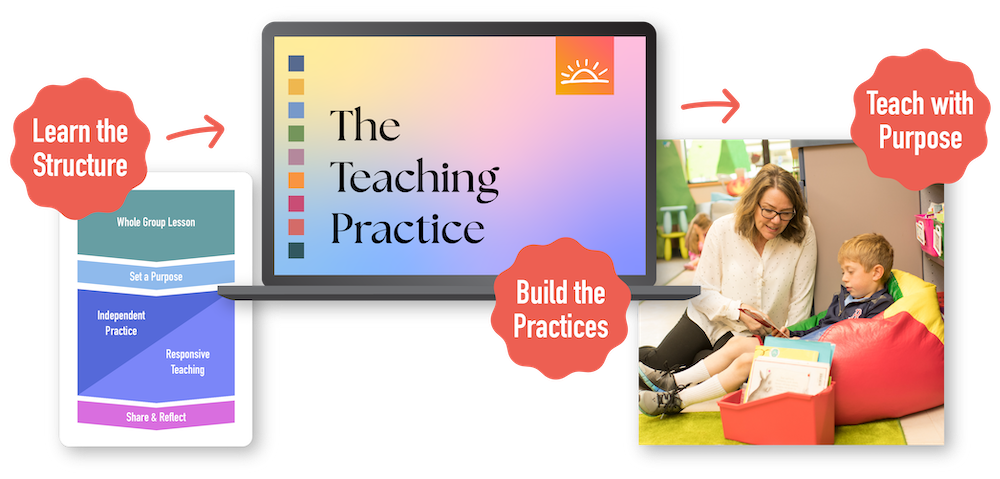
The Teaching Structure is the backbone of everything we teach at Teach Daily.
When you join The Teaching Practice, you:
The structure shows you what to learn. The courses teach you how. Your students experience the results.
Every course, tool, and resource connects back to this structure. That keeps professional learning focused and manageable instead of scattered and overwhelming.
The Teaching Structure synthesizes decades of research:
Each component is backed by extensive research. The structure itself has been implemented by hundreds of thousands of teachers across 20 years—first through Daily 5 and CAFE in literacy, now extended as a universal framework across all subjects through Prepared Classroom.
Quick lessons you can teach in 10 mins/day so students take responsibility for their learning and rely on you less.
Get the LessonsTeaching is complex. And the challenges teachers are navigating right now are real.
Strong programs, new mandates, and growing expectations have changed what classrooms look like. Yet the foundations of effective teaching remain the same.
Students need to practice independently.
Teachers need time to respond to learners.
Learning needs structure to carry forward.
These are skills that can be built.
At Teach Daily, we focus on the structure of teaching. How lessons, independent practice, and responsive conferring work together across a day so learning lasts.
Choose your next move:
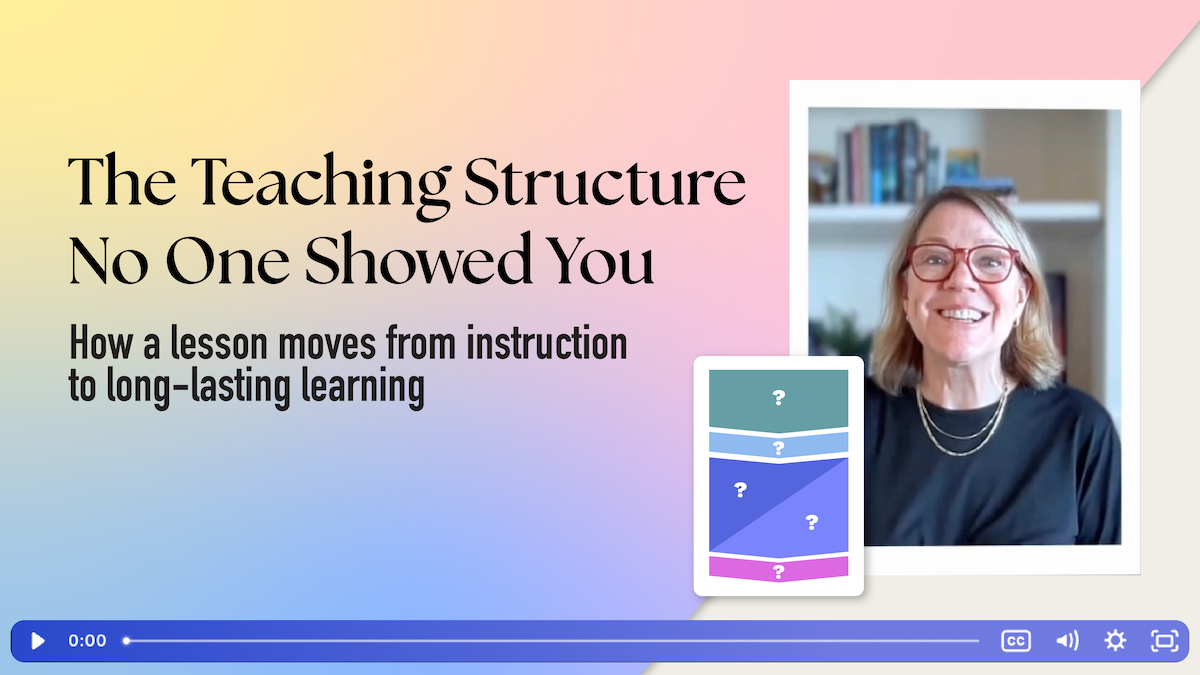
If you want to see the structure clearly, watch this training:
If you’re ready to strengthen these skills:

© 2026 Teach Daily
This site is protected by reCAPTCHA and the Google Privacy Policy and Terms of Service apply.