

By Gail Boushey Published: 7/16/2026 Updated: 7/16/2026
I was preparing a training on the Teaching Structure a few days ago when I found myself pulling old books from my shelf.
As I looked at the diagrams from the first edition of The Daily 5, then the second edition, and finally the version we use today, I noticed something I hadn't fully appreciated before.
The drawings had changed. Our understanding had deepened. Yet the foundation had remained remarkably consistent.
It reminded me of something I've come to believe after more than forty years in classrooms.
Every effective lesson has a structure.
Most teachers don't think about instruction this way. When we plan, we think about standards, curriculum, learning targets, assessments, and activities. We think about what students need to learn and how we'll teach it.
We rarely stop to think about the structure that holds all of those pieces together. Yet every effective lesson has one.
Whether we're teaching reading, math, science, writing, or social studies, effective instruction follows a predictable flow.
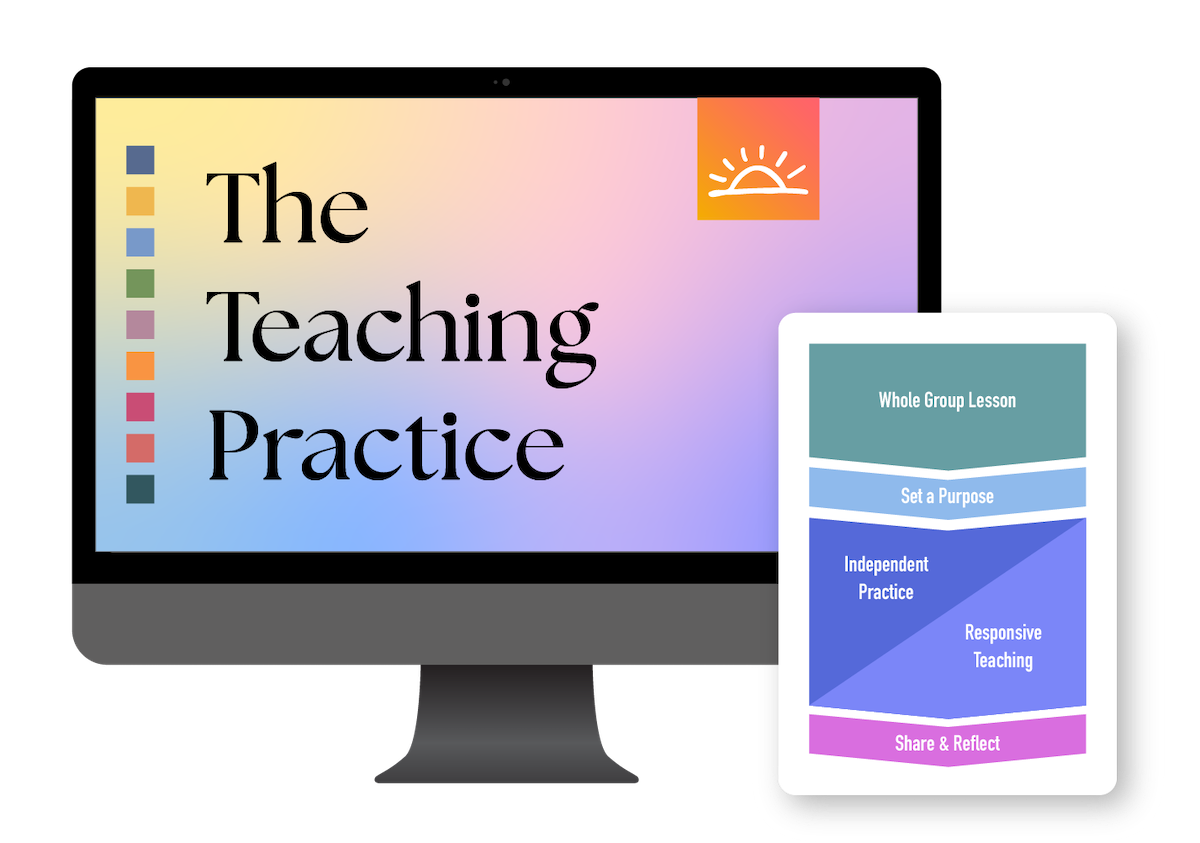
We gather students together to teach. We establish a clear purpose for learning. Students practice and apply what they've learned. While they work, we respond to what we notice by conferring, meeting with small groups, monitoring progress, or providing additional support. Then we bring everyone back together to reflect, celebrate learning, and prepare for what's next.
When teachers begin to see that structure, something shifts. Instead of feeling like they're managing a collection of disconnected strategies, they begin to see how every part of the lesson works together.
Whole-group instruction has a purpose.
Independent practice has a purpose.
Small groups have a purpose.
Conferring has a purpose.
Reflection has a purpose.
They aren't separate instructional events competing for time. They're parts of the same instructional structure.
The Teaching Structure allows teachers to see the lesson as a whole instead of a collection of strategies. Once you can see the whole, you know where each practice belongs, how the pieces connect, and why each part matters.
That's why I believe a teaching structure is so important. A structure isn't a schedule. It isn't a curriculum. It isn't another initiative.
It's the framework that allows effective teaching to happen. It helps teachers understand not only where each High-Impact Practice belongs, but why it belongs there. Without that structure, it's easy to feel like every instructional practice is competing for your time.
When am I supposed to fit in small groups?
How do I find time to confer?
Where does intervention happen?
How can students work independently while I'm teaching others?
How do I teach the curriculum and still respond to the students who need me most?
The answers are already within the structure. Small groups aren't an extra. They're part of responsive teaching.
Conferring isn't something to squeeze into the day. It's one of the ways teachers respond to students during independent practice.
Independent practice isn't something students do while they wait for the teacher. It's where learning begins to transfer from teacher support to student ownership.
Sharing and reflection aren't simply a nice way to end the lesson. They help students consolidate learning while giving teachers valuable information about what students understand and what comes next.
When we understand the Teaching Structure, those practices stop competing with one another. They begin supporting one another. That shift changes everything.
Teachers stop trying to "fit in" High-Impact Practices. Instead, they begin using the structure to make those practices possible.
Looking back, I realize that's what our diagrams have been trying to communicate for nearly twenty years.
The first version helped teachers organize a literacy block. The second reflected a deeper understanding of instructional flow. Today's version recognizes something even bigger. This isn't simply a literacy structure. It's a structure for teaching.
The diagrams changed because our understanding deepened. The High-Impact Practices remained. That realization feels especially important today.
Education continues to evolve. Curriculum changes. Research expands our understanding of learning. Schools adopt new initiatives, new language, and new expectations. Today we talk about Tier 1 instruction, Tier 2 intervention, WIN time, responsive teaching, flexible grouping, and progress monitoring.
Those ideas have strengthened our practice.
What strikes me is that the Teaching Structure has always provided a place for every one of them. It always has. The language evolved. Our understanding deepened. The structure remained.
A curriculum tells us what students need to learn.
A Teaching Structure helps us understand how that learning unfolds throughout a lesson.
It provides a framework that is intentional rather than accidental, responsive rather than rigid, and flexible enough to support any curriculum.
As I finished preparing that training, I realized I wasn't simply looking at three different diagrams. I was looking at more than twenty years of learning. Not learning that changed the structure. Learning that helped us better understand the power of the structure that had been there all along.
Because effective teaching has a structure.
When teachers understand that structure, every part of the lesson begins to make more sense.
And when every part works together instead of competing for time, teachers gain something even more valuable than a new framework.
They gain clarity.
Curriculum tells us what to teach. The Teaching Structure helps us understand how great teaching happens. When teachers can see the whole, every High-Impact Practice has a place, every instructional decision has a purpose, and every curriculum becomes stronger.
Quick lessons you can teach in 10 mins/day so students take responsibility for their learning and rely on you less.
Get the LessonsTeaching is complex. And the challenges teachers are navigating right now are real.
Strong programs, new mandates, and growing expectations have changed what classrooms look like. Yet the foundations of effective teaching remain the same.
Students need to practice independently.
Teachers need time to respond to learners.
Learning needs structure to carry forward.
These are skills that can be built.
At Teach Daily, we focus on the structure of teaching. How lessons, independent practice, and responsive conferring work together across a day so learning lasts.
Choose your next move:
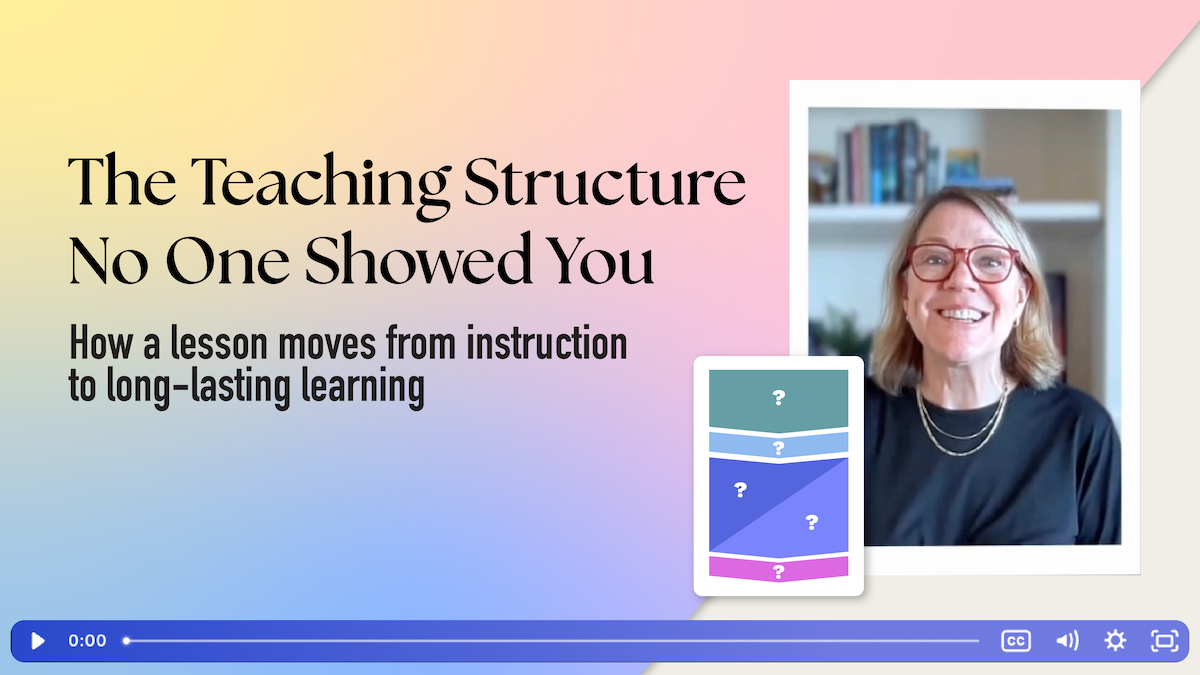
If you want to see the structure clearly, watch this training:
If you’re ready to strengthen these skills:

© 2026 Teach Daily
This site is protected by reCAPTCHA and the Google Privacy Policy and Terms of Service apply.