
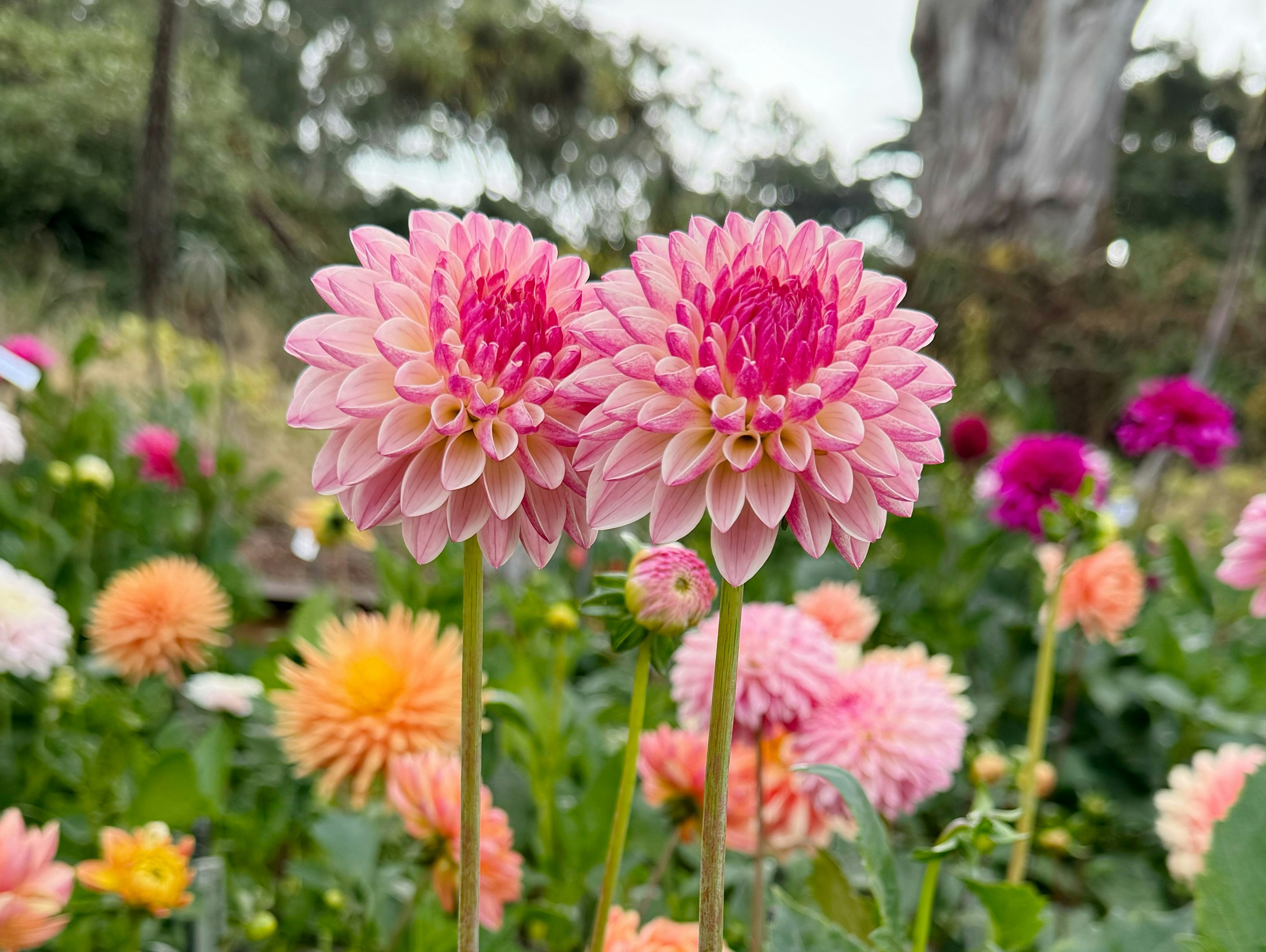
Linda and I had lunch last week. Before long, we were talking about her dahlias.
She knows every single plant by name.
Every morning she walks the rows. She looks closely at each one, noticing what has opened overnight, what surprised her since yesterday, what seems different. Then she writes it down. What she observed. What she's wondering. What she thinks might help.
She keeps a conferring notebook for her dahlias.
I started laughing when she said it, and she laughed too.
"I know, I know."
But then she said something I haven't stopped thinking about.
"I have spent years learning how to look at my students. How to observe before I evaluate. How to describe what I see before I decide what to do next. How to stay curious about what a child is capable of. After a while, that way of looking becomes the way you pay attention.”
She paused.
"And eventually, it isn't something you think about anymore. It's simply part of who you are.
Last week she found a black beetle tucked inside one of her dahlias. She had never seen one before. She didn't know what it meant or what to do next.
So she did what any good teacher does when something unexpected appears.
She got curious.
She started learning.
That is what years of refining your practice gives you. Not just better lessons or stronger routines. They give you a way of approaching what you don't yet know. The instinct to slow down, observe carefully, ask good questions, and stay curious a little longer before rushing toward an answer.
We're going to Linda's house in August. We'll walk through the rows of dahlias together, and she'll tell us the story behind each one.
Most people will see beautiful flowers. I can't wait to see what became possible because she stayed curious.
Gail
This article might be missing links that were included at the time of publication.