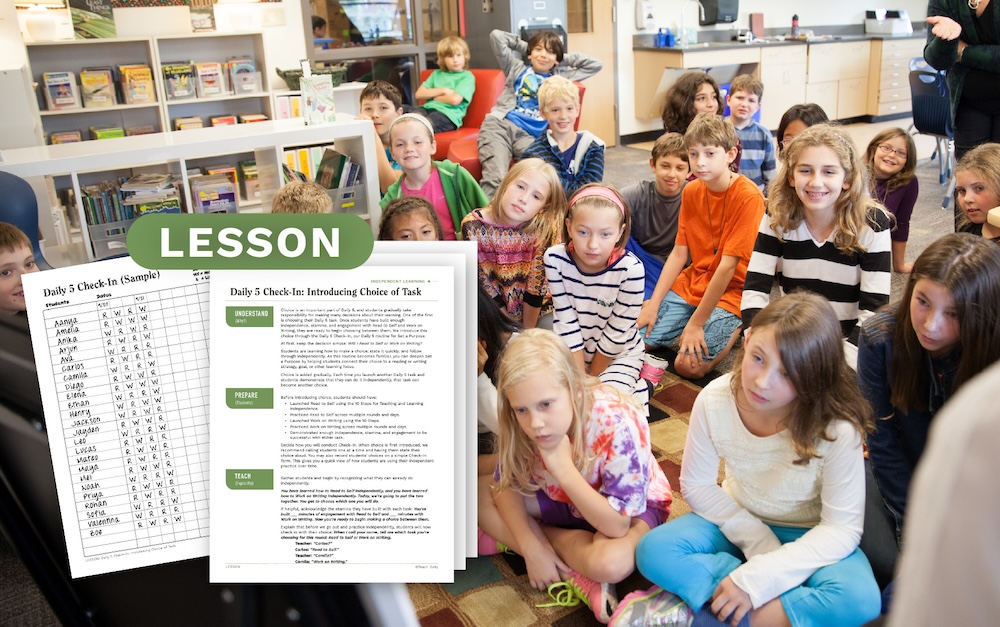
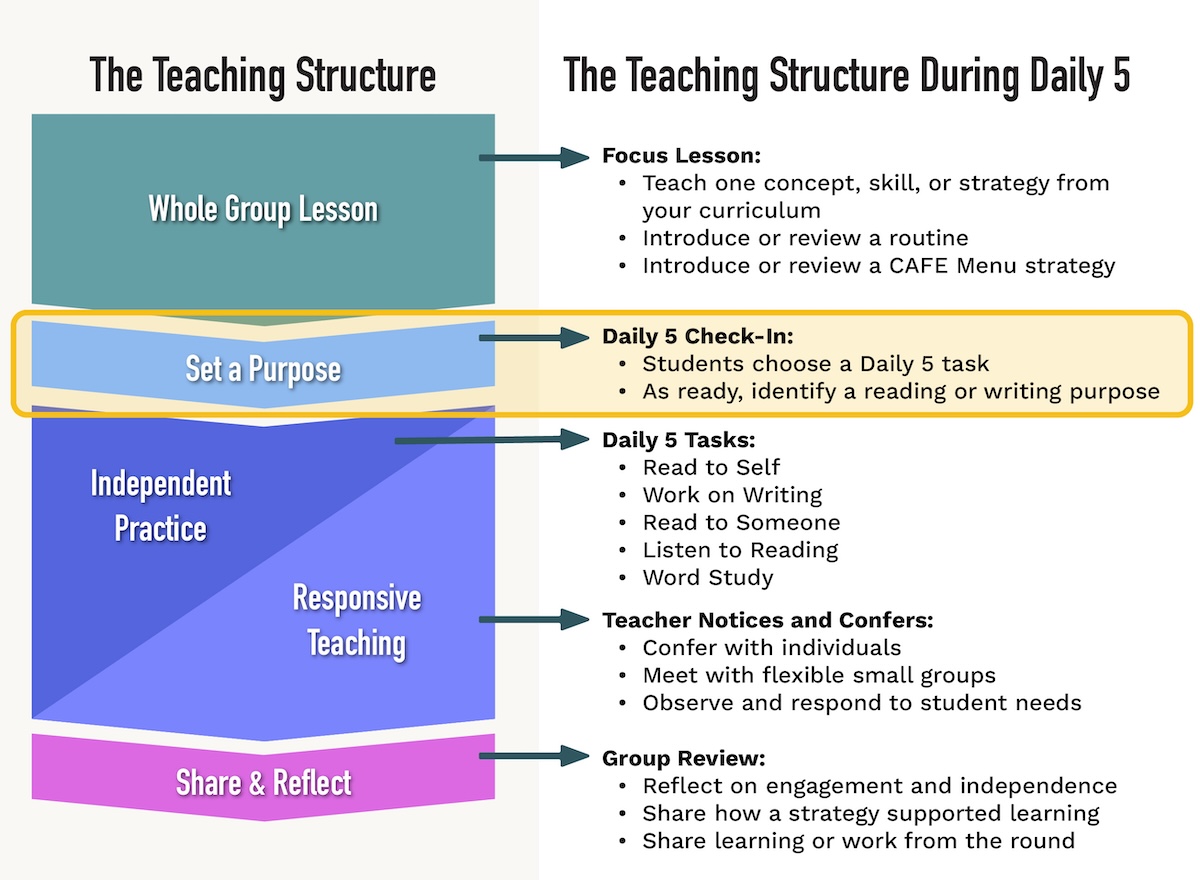
One of the simplest routines in Daily 5 is also one of the most important. We call it Daily 5 Check-In. Check-In is the Daily 5 routine for Set a Purpose, the second component of The Teaching Structure. Before students begin Independent Practice, they pause to identify what they will do and, as they're ready, what they will work on as a reader or writer.
Longtime Daily 5 teachers will recognize this routine. For many years, students gathered before each round, selected their Daily 5 choice, and shared what they planned to work on. Today, we have clearer language for the learning happening in that moment: students are setting a purpose. The routine remains familiar. Our understanding of why it matters has grown.
What Happens During Check-In?
Daily 5 Check-In, students answer two questions:
What will I do?
Students choose the Daily 5 task they will engage in during the round. Depending on what has been launched in your classroom, they might choose:
- Read to Self
- Work on Writing
- Read to Someone
- Listen to Reading
- Word Study
What will I work on?
As students are ready, they also identify the strategy, goal, or other learning purpose they will focus on during Independent Practice.
For example:
- “I’m choosing Read to Self, and I’m going to practice checking for understanding.”
- “I’m choosing Work on Writing, and I’m going to work on adding details.”
The Daily 5 task identifies how students will practice. Their purpose identifies what they are working to learn or improve.
Start with the Task, Then Layer In the Purpose
When students first learn Daily 5 Check-In, keep it simple. Start with: “I’m choosing Read to Self.” or “I’m choosing Work on Writing”
Students are learning how to make a decision, state it quickly, and follow through independently. As the routine becomes familiar, deepen the thinking: “I’m choosing Read to Self, and I’m going to practice checking for understanding.”
Eventually, we want students to consider their learning purpose before choosing the task: What am I working on as a reader or writer, and which Daily 5 task will give me the best opportunity to practice it?
This progression allows students to first become fluent with the Check-In routine and then take increasing responsibility for making purposeful decisions about their learning.
Connect Purpose to the Whole-Group Lesson
Within The Teaching Structure, Set a Purpose creates the bridge between Whole Group Lesson and Independent Practice.
Suppose your brief focus lesson taught students to back up and reread when meaning breaks down. During Check-In, a student might say: “I’m choosing Read to Self, and I’m going to practice rereading when something doesn’t make sense.”
Now the lesson has somewhere to go. Students move from instruction into authentic reading or writing with a clear opportunity to apply what they just learned. This is where transfer begins.
A student’s purpose does not always need to come from the lesson they just experienced. As students develop individual reading and writing goals, they may continue working toward a longer-term purpose that is equally meaningful.
Keep Check-In Brief
Check-In should create momentum toward Independent Practice. Especially when students are first learning the routine, you may call on each student to state their choice aloud. This gives you an opportunity to listen, coach decisions, and build accountability.
Teach students to decide before their name is called: “Have your choice ready in your brain. When you hear your name, tell us what you are choosing.”
When students are prepared, Check-In can happen very quickly. As students become more independent, the process can become even more efficient.
Students might:
- state their choice aloud
- tell a partner
- record their choice or purpose
- check in individually with the teacher
- identify their purpose quietly before beginning
The format matters less than the thinking. Students should begin Independent Practice knowing what they are doing and what they are working on.
Use Check-In to Coach Choice
As students gain experience with Daily 5, you may notice that some consistently choose the same task.
You might ask:
- “What are you working on as a reader or writer?”
- “How is this choice helping you grow?”
- “Which task would give you the best opportunity to practice that?”
We ask students to include Read to Self and Work on Writing at least once each day. Beyond that, choice can increasingly respond to what will support their learning. Over time, purpose can guide the choice rather than simply follow it.
The Teacher Sets a Purpose Too
Students are not the only ones thinking intentionally before Independent Practice. During this same moment, the teacher identifies a purpose for Responsive Teaching.
You might plan to:
- confer with individual students
- meet with a flexible small group
- complete Quick Checks
- observe engagement and independence
Students have a purpose for their work. You have a purpose for yours.
Why We Still Call It Daily 5 Check-In
Set a Purpose names the part of The Teaching Structure. Daily 5 Check-In names the specific routine we use to Set a Purpose during Daily 5. That distinction allows us to preserve familiar Daily 5 language while making the larger instructional purpose clear.
Check-In is more than choosing an activity. It is the moment when students begin making increasingly intentional decisions about their own learning before stepping into authentic Independent Practice.
Frequently Asked Questions
Do students need to choose a different Daily 5 task every round?
No. Students should choose work that supports their learning. We ask them to include Read to Self and Work on Writing at least once each day. Beyond that, they may return to the same task when it continues to be meaningful. For older students, Read to Self will be the most popular choice as they're embedded in their books and want to see what happens next.
Does every student need an individual purpose?
As students become ready for this layer of Check-In, yes. Even when students choose the same Daily 5 task, they may be working on different strategies or goals.
Should the purpose always come from today’s focus lesson?
Often, it can. Students may also continue working toward an individual reading or writing goal.
How long should Check-In take?
Once students understand the routine and have their decisions ready, many classes can move through Check-In in about a minute or two.
What if students struggle to identify a purpose?
Model your thinking, offer examples, and coach students through the process. Purpose-setting develops over time, just like any other routine.
Should students record their purpose?
Some classrooms do, while others share it aloud or identify it mentally. The thinking is more important than completing another form.
Downloads
For tracking Daily 5 choices